

Curiosity looks good on you
Drinks. Ideas. Conversations worth staying out for.
A lecture in a bar. You in?
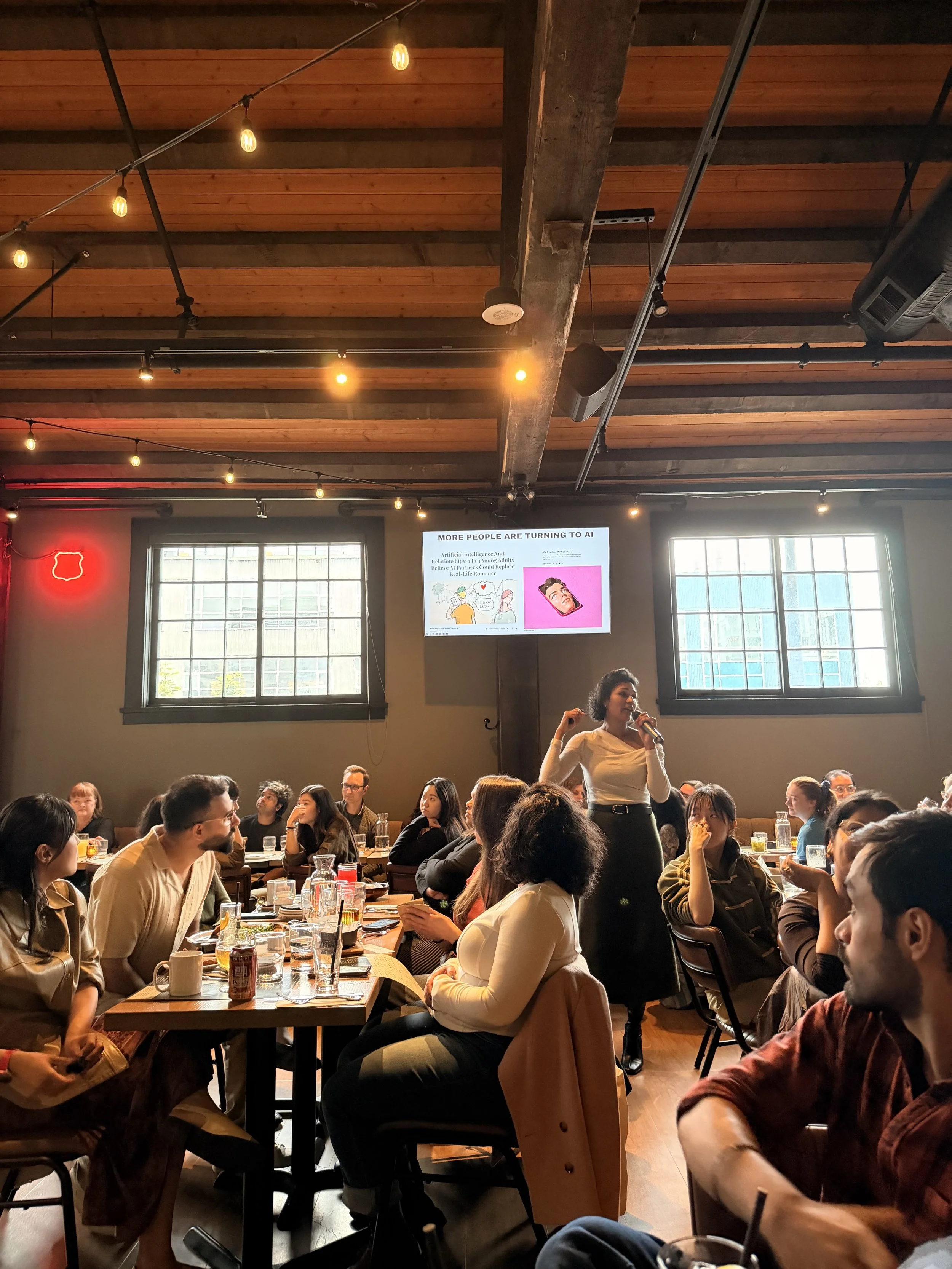
Not Your Typical Night-Out
Most nights out start the same way and end the same way. BrainChug is trying something different.
You walk into a bar, but instead of small talk, there’s an idea worth paying attention to. One expert takes the room through a topic you’ve never thought about this way before. And then the conversations actually go somewhere.
It’s a night that stays with you.
Upcoming Lectures
-
Inside the Dream State: The Science of Dreaming and REM sleep
Dr. Andrea Perrino
Most of us will spend a significant part of our lives dreaming, yet we understand surprisingly little about what happens once our waking mind switches off.
What is the purpose of dreaming? When are dreams most vivid? When does dreaming become a disorder? And what, if anything, can our dreams tell us?
Dr. Andrea Perrino will take us inside the sleeping body and brain, from what happens during REM sleep to the content of our dreams, exploring what we know, what we think we know, and what remains a mystery.
-
How Scientific Is Forensic Science?
By Dr. Adele Quigley-McBride
Most of us assume forensic science is exactly what the label suggests: science. Objective. Tested. Reliable.
But what if a forensic "match" is actually a human judgment rather than a scientific fact? What if some of the methods used to reach those judgments are not backed by research to the extent we assume? And what if the system has only limited ways to catch errors or bias when they occur?
Using real wrongful-conviction cases, Dr. Adele Quigley-McBride will explore how much forensic evidence depends on human judgment, why the system can fail to detect errors and bias, and what that means for anyone accused of a crime.
-
The Science of Why Relationships Are So Complex
By Dr. Yuthika Girme
June 8, 2026 - 6:30pm onwards
Being close to someone sounds simple, until it isn’t.
Whether you’re dating, single, or in a long-term relationship, closeness often brings vulnerability, overthinking, and unexpected reactions we don’t fully understand.
This session unpacks the science of attachment-related insecurities, and how our expectations about relationships quietly shape the way we date, connect, and stay in relationships. Backed by scientific research, we’ll explore why singlehood and relationships can feel hard and what actually helps us feel more secure, both with others and within ourselves.ption goes here -
The Truth About Crime (That No One Talks About)
By Dr. Shannon Linning
May 25, 2026 - 6:30PM
Most of us believe crime is complex, widespread, and best solved with more policing. But what if those assumptions are exactly what’s holding us back?In this talk, we’ll challenge some of the most common beliefs about crime, from “more arrests reduce crime” to “crime is everywhere”, and explore a different way of thinking that focuses on patterns, places, and prevention. The result is a clearer, more practical understanding of what actually reduces crime, and why many well-intentioned solutions fail.
-
Evolved For Each Other: The Social Brain in an Anti-Social Age
By Dr. Azim Shariff
April 20, 2026 - 6:30PM
Why did humans evolve such large brains? Not just for logic, but to navigate trust, cooperation, and life in groups. From the power of gossip to today’s loneliness crisis, discover how our social brain is struggling to keep up with the modern world.